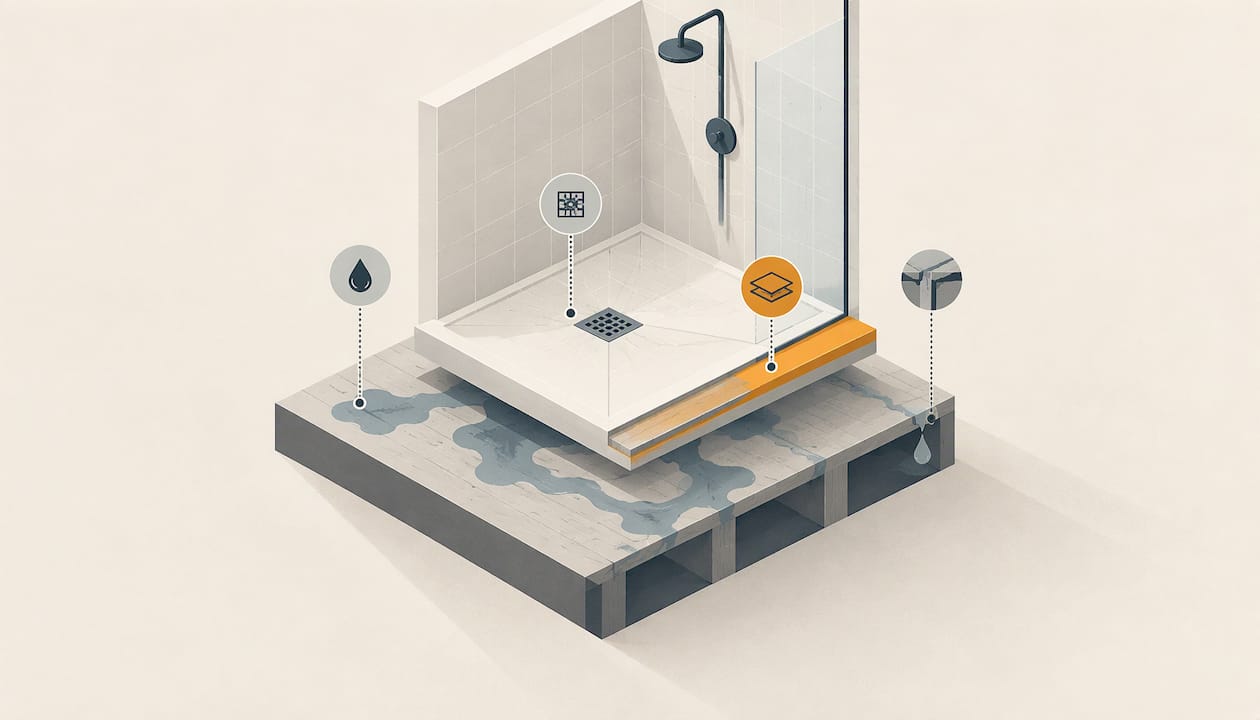
A leaking shower is fixed in three steps: find where the water actually escapes, stop the water getting in, then repair whatever it has already damaged. The first step is where most repairs go wrong, because water travels along pipes and boards and shows up far from its source. A dripping showerhead or a gap in the caulk is a small job. A leak in the pan, the drain seal or the wall behind the tile means tile, backing board and sometimes framing have to come out. That is work we do at LLS Handyman for homeowners and property managers around Roanoke, Salem and Cave Spring, from the estimate to the final walkthrough.
TL;DR
- Find the source before you repair anything. Water often pools or stains far from where it gets in, so test one part at a time.
- Showerhead drips and failed caulk are quick fixes. A leak at the pan, the drain or behind the wall means opening the shower.
- If water is coming through a ceiling or floor, stop using the shower, shut off its supply if you can, photograph the damage and get it inspected.
- Slow leaks are usually the expensive ones. Insurers generally cover sudden accidents, not damage that built up over months.
- For tile, pan, drywall or framing repair in the Roanoke area, we offer free estimates, licensed and insured work, and one point of contact from start to finish.
Table of Contents
- Why the leak is rarely where the puddle is
- How to find the source of a shower leak
- Quick fixes: showerhead, caulk and grout
- Drain and shower pan leaks
- Shower leaking behind the wall
- If the shower is leaking through the floor or ceiling
- What shower leak repair costs
- Does homeowners insurance cover a leaking shower?
- When to repair and when to rebuild
- Getting the repair done in Roanoke
- FAQ
- Sources
Why the leak is rarely where the puddle is
Water follows gravity, pipes, framing and the back of tile. A plumbing supplier warns that a stain or puddle may appear far from the real leak, so you should not decide on a cause before testing. This Old House's plumbing and heating expert recommends working through the shower in order: rule out the drain, then the pan, then the valve, then the tile, to pinpoint where water gets through.

That order matters for your wallet. Replacing a valve cartridge when the real problem is a cracked pan wastes money and leaves the water damage growing.
How to find the source of a shower leak
Start with what you can see and finish with what only a test shows.
- Look for signs. This Old House's checklist is to inspect for water stains or mold, check the pan for cracks, look at the drain, and check caulk and grout. Test the valve with the water both on and off.
- Run the shower in parts. Use the shower normally, then use only the tub spout or only the showerhead if you have both. Note when the stain or drip appears. A leak that shows up only while the water runs points to supply plumbing or spray. A leak that shows up after a few showers points to the pan, drain or tile.
- Test the drain. Plug it and let a small puddle form in the base. Family Handyman describes marking the edge of the puddle and waiting an hour: a shrinking puddle means the drain seal is leaking.
- Test the pan. An insurer that tracks shower claims recommends an annual pan test: block the drain, fill the base with about 1 inch of water, mark the level and check it after 8 hours. A drop means the pan is leaking.
- Check the wall. Tap the tile with a rubber mallet and listen for hollow sounds, then use a moisture meter on the wall, behind the baseboards and on the floor beside the shower. A wiggling valve or a trim plate pulling away from the wall means pipes behind the wall are shifting.
The same insurer reports that homes more than 20 years old were 37% more likely to have shower-related water damage, and that more than half of shower stall incidents involved a faulty pan. If your bathroom is older, assume the pan and drain deserve a look.
Quick fixes: showerhead, caulk and grout
Some leaks are exactly as simple as they look.
A showerhead that drips at the connection. A water utility group says most of these are fixed by tightening the shower arm connection with two wrenches, using one to hold the arm steady so it does not twist inside the wall. If it still leaks, wrap plumber's tape around the arm two or three times before refitting the head. Hold the arm firmly. Turning it against the pipe in the wall is how a small drip becomes a wall leak.
A showerhead that drips from the face. Limescale in the spray holes or a worn O-ring inside the head is the usual cause, and cleaning the head and replacing the O-ring addresses it.
Cracked grout or failed caulk. Water that gets behind tile through hairline gaps is a common cause of hidden damage. Family Handyman notes that splash leaks are the most common type of bathroom leak and can rot the plywood subfloor over time. Warning signs include curling vinyl, loose tiles, peeling paint, and stains on the ceiling or joists below. If caulk has peeled, remove it fully, dry the joint and re-caulk with a tub-and-tile caulk. If grout is crumbling across a large area, or tiles sound hollow, the problem has gone past surface repair.
A caulk bead is a maintenance job. Once water has been getting behind the tile for a while, the tile itself has to be lifted and the backing checked. We handle tile installation and repair as part of our bathroom remodeling work in Roanoke.
Drain and shower pan leaks
Drain leaks are especially common in plastic or fiberglass bases because the material flexes and can break the drain seal. The usual repair is to unscrew the drain flange, clean it, seal it and replace the rubber gasket, or, with access from below, tighten the ring nut or replace the drain assembly. Both are described in Family Handyman's drain repair steps.
The catch is access. If the shower sits on a slab, or the ceiling below is finished and there is no panel, you cannot reach the underside. And if the pan test shows a drop even with a sound drain, the pan itself is compromised. A damaged drain seal usually needs replacement, and a leaking pan may need professional repair or replacement. In a tiled shower that means removing the tile floor and rebuilding the base. That is a remodeling job, not a patch.
Shower leaking behind the wall
A leak behind the wall is the one homeowners underestimate, because the first signs are subtle. This Old House lists the causes as cracked or loose tiles, deteriorating grout or caulk, an improperly installed waterproofing membrane, poor ventilation and plumbing leaks. The warning signs are:
- Discolored tile or grout
- A musty smell
- Peeling paint outside the shower
- Soft or spongy wall areas
- Visible mold
All of these are in This Old House's guide to a soggy shower wall.
The repair is straightforward in principle and labor-heavy in practice. Damaged tile and wet drywall or backer board come out, any framing that has stayed wet is checked, the source is fixed, and the wall is rebuilt with waterproofing, tile and grout. The same guide says to bring in a professional when damage extends beyond the shower, when plumbing or structural problems are suspected, or when mold is extensive.
Two cautions apply here:
- Valve and pipe leaks. If the leak is in the supply plumbing behind the wall, a licensed plumber should repair the pipe or valve. Turn off the water at the fixture shut-off or the house main first.
- Mold and structure. If the wall is soft or you see widespread mold, stop using the shower and have the wall opened and assessed before anything is covered up again.
Once the plumbing is sound, the wall, tile, drywall and framing repair is our part of the job. That is why one point of contact helps: the person who looks at the damage at the estimate is the person you talk to through the final walkthrough, rather than you coordinating separate trades.
If the shower is leaking through the floor or ceiling
Water coming through a ceiling below or soaking the floor beside the shower is urgent. Do this in order:
- Stop using the shower until you know the extent of the problem.
- Shut off the water supply to the shower if you can find the shut-off. If you cannot, close the house main.
- Photograph and film the damage before you move or clean anything. Insurers expect documentation, and one insurer advises shutting off the source, documenting everything and removing standing water as the first steps.
- Ventilate the area and keep fans running to slow mold.
- Have the area inspected. A moisture check shows how far the water has spread. Part of the floor or wall may have to be removed to dry it.
Turn off electricity to the affected area only if it is safe to do so. If water is near outlets, light fixtures or the panel, call an electrician or your utility before touching anything.
What shower leak repair costs
Cost depends on where the leak is and how long it ran. One national price guide puts typical shower leak repair at $150 to $600, with the overall range running from $150 to $2,700. In that guide, behind-the-wall leaks run $500 to $2,500 or more, and pan leaks $530 to $2,700 or more. Those are national estimates, not Roanoke quotes. Your own estimate depends on what is found once the area is open.
Two things push the number up:
- Hidden damage. The same guide points out that the first estimate may not capture the whole cost, because water spreads through walls, floors and ceilings. Drywall, tile and moisture work are often separate line items.
- Delay. A drip that is repaired in week one is a caulk or gasket job. The same drip left for months can rot the subfloor.
This is why a written estimate that covers the leak repair and the rebuild together is useful. We offer free estimates, and our pricing approach is straightforward and upfront. We do not publish set prices for shower work, because the scope depends on what is behind the tile.
Does homeowners insurance cover a leaking shower?
It depends on whether the leak was sudden or gradual. Standard homeowners policies generally cover sudden, accidental water damage but exclude damage from leaks that developed slowly over time. One insurer gives the example of a shower pan leaking for months and rotting the subfloor as an excluded loss, and notes that policies typically do not pay to repair the source of the water itself.
Courts have upheld this kind of exclusion. A federal appeals court case, Ellis v. State Farm, upheld a policy's seepage exclusion for water escaping over time from plumbing, including within or around a shower stall. The court also noted that policies can cover tear-out costs when the water damage itself is covered.
Some policies add an endorsement for hidden leaks. One explainer says a limited seepage endorsement can cover leaking joints under shower pans that are not visible without removing fixtures, as long as the source was concealed. Read your own policy and call your insurer's claims line before you start repairs, and photograph everything first. Save any failed parts. Coverage differs by policy and by state, so your insurer, not an article, has the final word.

When to repair and when to rebuild
A repair makes sense when the leak is isolated: a worn gasket, a loose showerhead, a failed caulk line, a few cracked grout joints on a wall that sounds solid. A rebuild makes sense when:
- The pan fails the water test.
- Many tiles sound hollow, or the wall feels soft.
- Mold or a musty smell returns after cleaning.
- The shower is old, and the waterproofing is original.
- You are already planning to update the tile or the layout.
In those cases, patching tends to repeat the same cost twice. Fixing the leak while the wall is open is usually the cheapest moment to upgrade the surround, the pan and the tile.
Getting the repair done in Roanoke
If your shower is leaking in the Roanoke, Salem or Cave Spring area, we repair and rebuild it: tile removal and replacement, shower and bathroom remodeling, drywall repair and framing. Our work is licensed and insured, estimates are free, and you deal with one point of contact from the estimate through the final walkthrough, which matters most when a repair turns into tile, drywall and framing work.

If you already see stains, soft spots or loose tile, start with a free estimate through our bathroom remodeling and tile page. If the damage has reached the wall or ceiling, our drywall repair and framing service covers that side of the job.
Property managers and busy owners can use the same route: describe where you see water and when it appears, and send photos. That shortens the first visit.
FAQ
What is the most common cause of a leaking shower?
Worn or cracked caulk and grout, which let splash water behind the tile, are the most common cause. Drain seals and shower pans are the next suspects, especially in older homes or plastic and fiberglass bases. Test the drain and the pan before you replace anything.
How do I know if my shower is leaking behind the wall?
Look for discolored grout, a musty odor, peeling paint beside the shower, soft or spongy wall areas, or a valve trim that moves. Tapping the tile with a rubber mallet and hearing hollow sounds is another sign. A moisture meter reading on the wall and nearby floor confirms it.
Can I keep using a leaking shower?
It is better not to. Every shower adds water to whatever is hidden behind the tile or under the pan, and a small leak can turn into subfloor rot or mold. If water is showing through a ceiling or floor, stop using it and shut off the supply until it is inspected.
How much does it cost to fix a shower leak?
One national guide gives $150 to $600 for a typical repair, rising to $500 to $2,500 or more for leaks behind a wall and $530 to $2,700 or more for pan leaks. Tile, drywall and drying work are often extra. A free estimate on site gives you a figure for your shower.
Does homeowners insurance pay for a leaking shower?
Usually only when the damage was sudden and accidental. Slow leaks that went on for months are commonly excluded, and policies typically do not pay to fix the leaking part itself. Check your policy for a hidden-leak endorsement and call your insurer before repairs begin.
Sources
- This Old House: What You Need to Know to Troubleshoot a Leaky Shower
- This Old House: Saving a Soggy Shower Wall
- Family Handyman: How To Find and Repair Hidden Plumbing Leaks
- Plumbingsupply.com: How to Diagnose a Leaky Shower
- Regional Water Providers Consortium: Shower
- Manatee Insurance Exchange: Preventing Water Damage
- Plumbing Resource: How To Repair a Leaking Shower
- Allied Property & Casualty: Residential Water Damage
- US Home Costs: Shower Leak Repair Cost in 2026
- U.S. Tenth Circuit: Ellis v. State Farm opinion, 2009
- LegalClarity: Limited Seepage or Leakage of Water Endorsement